Ted Stuart
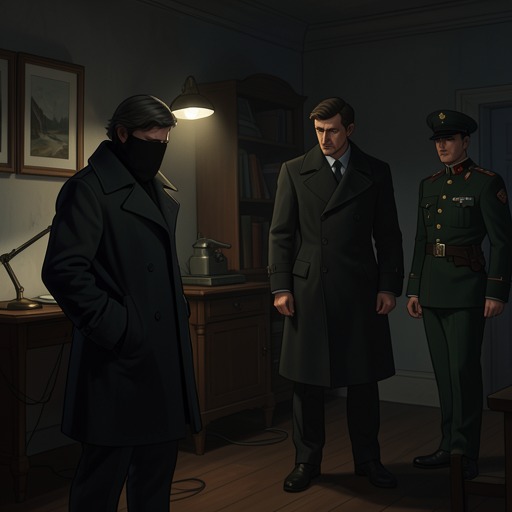
Say NothingTed Stuart was an undercover British sapper whose ordinary-looking work as a laundry-van driver concealed his military role. His killing in autumn 1972, during a coordinated Provisional IRA attack on British intelligence operations in Belfast, turned a familiar neighborhood service into the scene of an ambush.
Identity and Introduction
The Four Square Laundry van was a regular sight at Twinbrook estate, where few shops served a mixed Catholic and Protestant community that was relatively calm by Belfast’s standards. Each week, Sarah Jane Warke collected residents’ dirty laundry and returned it clean and neatly folded several days later. The prices were cut-rate, and customers liked both Warke and the easy-going young driver, whom local children called Teddy. Stuart mostly stayed behind the wheel, his routine giving the covert operation the appearance of a door-to-door trade.
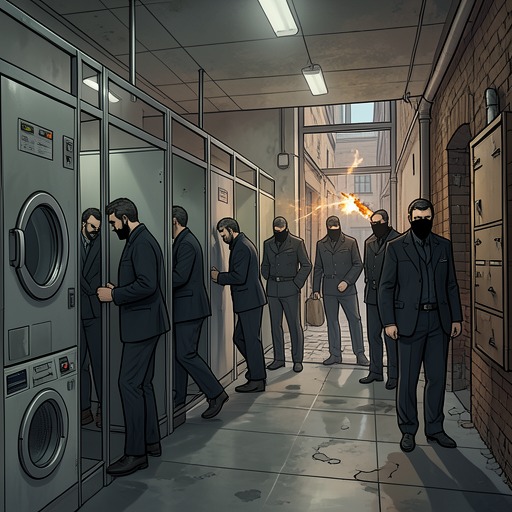
One autumn day in 1972, Warke was speaking with a housewife at her doorway when a loud crack interrupted them. Two armed men appeared beside the van, one carrying a machine gun and the other a rifle, and fired at close range into the driver’s side. Warke watched from the doorway as Stuart was killed almost instantly; then one of the gunmen turned toward her. The scene’s abrupt shift—from a familiar weekly collection to gunfire—exposed the lethal purpose hidden inside the laundry service.
Military Role and Targeting
Stuart was twenty years old, a British sapper serving with the Royal Engineers, and had been in Northern Ireland only since June 1972. Soldiering had been his ambition since childhood. His cover as a laundry-van driver placed him inside a covert intelligence operation: Sarah Jane Warke, his partner on the route, was also an undercover soldier, serving with the Women’s Royal Army Corps. The Provisional IRA attack was intended to kill the pair and to spray the van’s ceiling with bullets, targeting a soldier believed to be concealed inside. The gunmen did not carry out that additional order; the account leaves open whether a third soldier was in the van, noting only that, if so, he escaped alive.
The Coordinated Strike and Its Limits
The attack on Stuart’s van was one part of a plan to dismantle the Mobile Reaction Force’s intelligence network in a single hour. After Brendan Hughes learned of the laundry operation, Gerry Adams urged him to gather more intelligence before striking. By early October, the Provisional IRA had identified two other targets: an office in the city centre and a massage parlour on Antrim Road, where a talkative masseuse elicited information from customers. Three teams attacked the locations almost simultaneously, since striking them one by one risked alerting the operation and allowing its personnel to escape.
The plan’s intended sweep was not achieved. Sarah Jane Warke survived the attack on the van by taking refuge in a local woman’s house and escaping through the back door with the woman’s help; the teams who attacked the office and massage parlour did not hit other members of the Mobile Reaction Force. Stuart’s death was therefore both a central result of the operation and part of a wider effort whose reach proved incomplete.
Victory and Human Cost
The Provisional IRA regarded the Four Square Laundry operation as a major victory, and Brendan Hughes was proud of its execution. Decades later, Gerry Adams described it in his memoir as “a devastating blow” to the British. That retrospective language frames Stuart’s death within the operation’s strategic meaning for its attackers: the young driver remembered by neighborhood children as Teddy was also a soldier killed in an intelligence war. The contrast between the campaign’s measure of success and the personal fact of his death gives the episode its double register—as an intelligence setback for the British and a fatal ambush of a twenty-year-old whose covert role had been concealed by an ordinary service.